No Response to Your Applications? How to Diagnose Where It Breaks
Silence is not feedback, but the pattern is. Where you stall tells you what to fix, and the answer is different at each stage of the funnel.
Read article →
The Thank You Email After an Interview: What to Actually Write
A thank you email is the only chance you get to revise a weak answer. Send it within 24 hours, make it specific, and use it to close the gap.
Read article →
Resume After 50: How to Compete Without Hiding Your Experience
Age bias in hiring is real and mostly operates through signals you control. What to remove, what to keep, and why hiding experience backfires.
Read article →
Project Manager Resume: Budget, Scope and the Numbers That Matter
Every project manager coordinated stakeholders and delivered on time. What separates you is budget, scope, methodology, and the project you rescued.
Read article →
Sales Resume: Why Quota Attainment Beats Everything Else
A sales resume without quota numbers is a sales resume that failed. What to include, how to handle a bad year, and what sales leaders check first.
Read article →
Teacher Resume: What School Hiring Panels Check First
Teaching applications are screened for certification, grade band and subject before anyone reads a philosophy statement. How to structure the page around t…
Read article →
Military to Civilian Resume: How to Translate Your Service
A civilian hiring manager cannot decode rank, MOS codes or unit names. How to translate service into language that gets read, without diminishing what you …
Read article →
How to Write a Resume for Remote Jobs
Remote roles draw hundreds of applicants and screen for something office roles do not: proof you can work unsupervised. How to show it on the page.
Read article →
How to List Education on a Resume at Every Career Stage
Where education goes, what to include, and when to drop your graduation year. The rules change completely between your first job and your fifteenth year.
Read article →
Resume File Format: Should You Send a PDF or a Word Document?
PDF preserves your formatting. Word is what some recruiters and agencies require. How to decide per application, and the one filename rule nobody follows.
Read article →
Salary Negotiation: What to Do in the 24 Hours After an Offer
Most candidates accept the first number within an hour. The 24 hours after an offer is the only moment your leverage is at its peak. How to use it.
Read article →
Job Hopping on a Resume: How to Present a Short Tenure Record
Several short roles in a row raise one question, and silence answers it badly. How to present a job hopping record so the pattern reads as deliberate.
Read article →
Nursing and Healthcare Resume: What Clinical Recruiters Check First
Clinical resumes are screened for licensure and setting before anyone reads an achievement. What healthcare recruiters check first, and in what order.
Read article →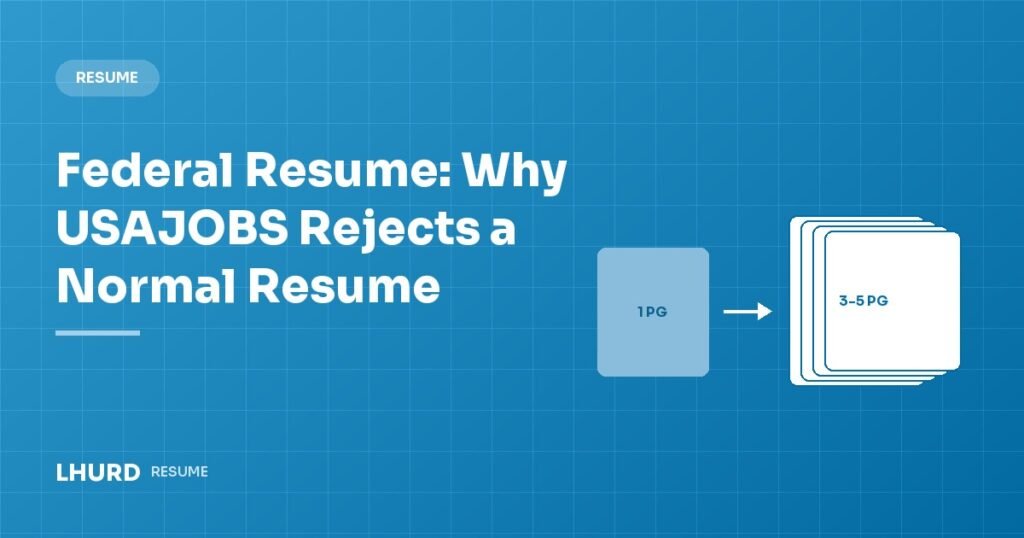
Federal Resume: Why USAJOBS Rejects a Normal Resume
A federal resume is a different document from a private sector one. Longer, more detailed, and scored against stated criteria. What USAJOBS actually requir…
Read article →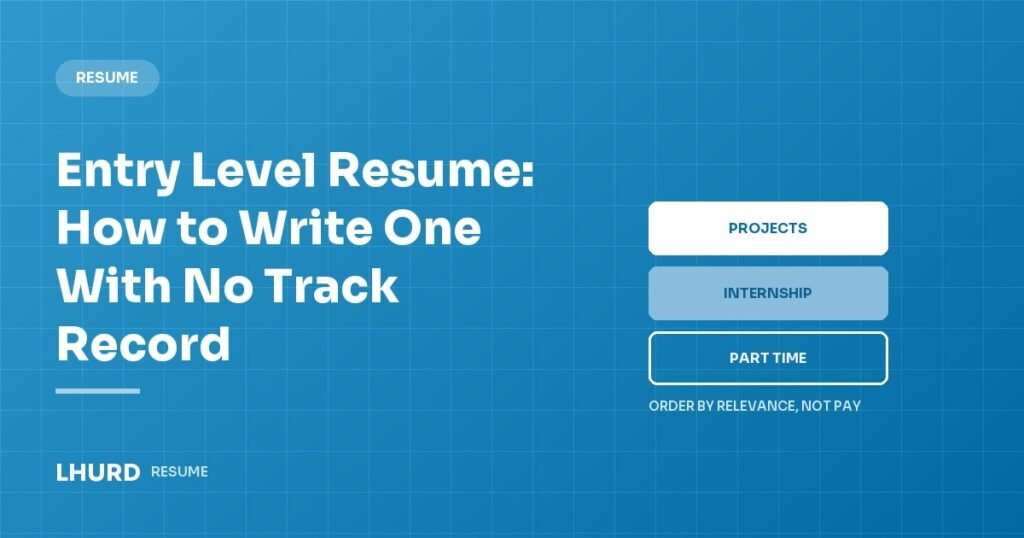
Entry Level Resume: How to Write One With No Track Record
An entry level resume competes on evidence, not years. What counts as experience, what goes where, and the mistakes that cost graduates interviews.
Read article →
How to Write a Resume After a Layoff
A layoff is a company decision, not a performance review. How to present a role that ended abruptly, what language to use, and what to do in the first week…
Read article →
LinkedIn Profile vs Resume: What Actually Changes
Pasting your resume into LinkedIn wastes the platform. Different readers, different length, different voice. What actually changes between the two.
Read article →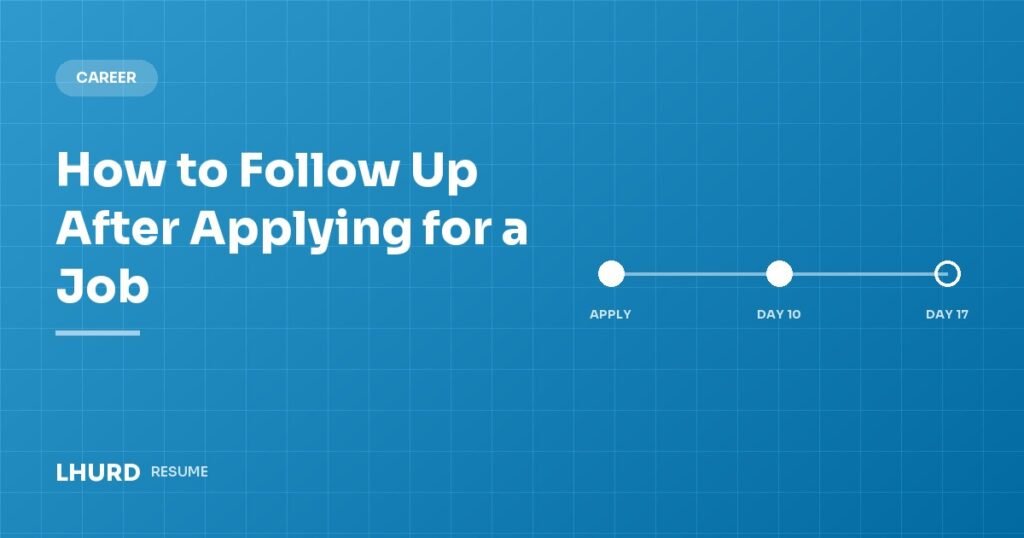
How to Follow Up After Applying for a Job
Following up works when it is timed right and says something. A template chaser a day later does not. When to follow up, who to contact, and what to write.
Read article →
Resume References: What to Do in 2026
References available upon request wastes a line and tells a recruiter nothing. What to do with references in 2026, and how to brief the people vouching for…
Read article →
How Far Back Should a Resume Go?
Fifteen years is the working rule, but the real test is relevance, not age. How to decide what stays, what compresses, and what comes off entirely.
Read article →
Should You Put a Photo on Your Resume? US and Canada Rules
In the US and Canada, a photo on your resume can get it discarded unread for legal reasons. Where the convention differs, and what to do instead.
Read article →
How to Write a Resume for an Internal Promotion
Applying for a promotion where everybody already knows you is a different problem. Familiarity works against you. How to write the internal resume properly…
Read article →
Resume Action Verbs: Which Ones Actually Carry Weight
Lists of 200 resume action verbs do not help. What matters is whether the verb describes ownership and is followed by a result. Here is how to choose.
Read article →
How to List Skills on a Resume Without Wasting the Space
Most resume skills sections are a list of adjectives that describe everybody. How to build one that adds keywords, proves capability, and earns its space.
Read article →
Resume Format: Chronological vs Functional vs Hybrid
Chronological, functional, or hybrid? One of the three gets you filtered out. How to pick a resume format that survives the ATS and the human after it.
Read article →
How to Tailor Your Resume for Every Job Without Rewriting It
Tailoring your resume to a job description works. Rewriting it from scratch does not, because nobody sustains that. Here is a system that takes fifteen min…
Read article →
Tech vs Finance Resume: Why One Format Does Not Fit Both
A tech hiring manager scans for what you can build. Finance scans for what you can be trusted with. What changes between the two, and how to build both.
Read article →
AI Resume Builders: What They Get Right and What They Cost You
AI resume builders fix formatting and verbs well. They also produce the most forgettable document in the stack. Where the line sits, and how to use them.
Read article →
How to Explain an Employment Gap on Your Resume
An employment gap is not a disqualifier, but an unexplained one is. How to account for time away in a single line, and what to say when you are asked.
Read article →
Resume Length: How Long Should a Resume Be in 2026
How long should a resume be in 2026? One page or two is the wrong question. Decide by career stage, and cut every line that does not prove something.
Read article →
Resume Keywords: How to Use Them Without Getting Rejected by ATS
Most job seekers either ignore resume keywords or stuff them in aggressively. Here is the right way to use keywords to pass ATS and impress the human who r…
Read article →
How to Write a Resume Summary That Gets You Interviews in 2026
The resume summary is the first thing a recruiter reads and the last thing most job seekers write well. Here is the four-line formula that gets interviews …
Read article →
What Recruiters Look for in 6 Seconds on Your Resume
A recruiter's first pass takes less than six seconds. Here is exactly what they scan for and how to make every second count on your resume.
Read article →
Executive Resume vs Standard Resume: What Actually Changes
Applying for a senior role with a standard resume is one of the most costly mistakes in job searching. Here is exactly what separates an executive resume f…
Read article →
How to Write a Resume for Canadian Jobs: What US Applicants Get Wrong
Canada's job market has its own rules — and a US resume will cost you interviews. Here’s exactly what formatting differences, spelling conventions, and reg…
Read article →
How to Quantify Achievements on a Resume: The Formula That Gets Callbacks
Most resumes list job duties. The ones that land interviews list results. Here's the exact CAR formula for writing achievement-based resume bullets that ge…
Read article →
Career Change Resume: How to Reframe Your Experience
Switching industries does not mean starting over. Learn how to write a career change resume that translates your transferable skills into language your new…
Read article →
How to Write a Cover Letter That Actually Gets Read
Most cover letters are ignored in the first sentence. Learn how to write a cover letter that leads with the employer's problem, backs it with real evidence…
Read article →
LinkedIn Summary Examples That Get You Hired
Your LinkedIn summary is your most valuable real estate for attracting recruiters. These LinkedIn summary examples and frameworks will help you write an Ab…
Read article →
ATS Resume Tips: How to Beat the Algorithm in 2026
75% of resumes are rejected by ATS software before a human ever reads them. These ATS resume tips for 2026 will help you optimize keywords, formatting, and…
Read article →
How to Write a Resume With No Work Experience
No work experience is a starting point, not a dead end. Learn how to write a resume with no work experience using education, projects, volunteer work, and …
Read article →
Your LinkedIn Headline Is Not Your Job Title
Read article →
It’s Not a Number Problem. It’s a Positioning Problem
Read article →
Most Resumes Fail Because of Positioning
Read article →The ATS Survival Checklist
23 checks to run before you submit, so software never rejects you before a human reads a word. Written by our team, not scraped from anywhere.
- Parsing
- Keyword matching
- The 6-second scan
- 6 pages, free
Reading is good. Getting hired is better.
Send us your resume and we will tell you exactly what is holding it back, within 12 to 24 hours.
Get a free resume review