5 min read
How to Follow Up After Applying Without Becoming the Candidate Who Chases
Most follow up messages are a polite request for a status update, which gives the reader nothing to respond to. Here is the timing and the content that gets a reply.
Why Most Follow Ups Fail
The standard follow up arrives three days after the application, addressed to a generic inbox, and asks whether the role has been filled. It gives the recipient nothing to act on and nothing to reply to beyond a status they may not have.
Hiring is slower than candidates expect. A corporate process commonly runs several weeks between application and first contact, so a chaser at day three mostly signals that you do not know how the process works.
Wait One to Two Weeks
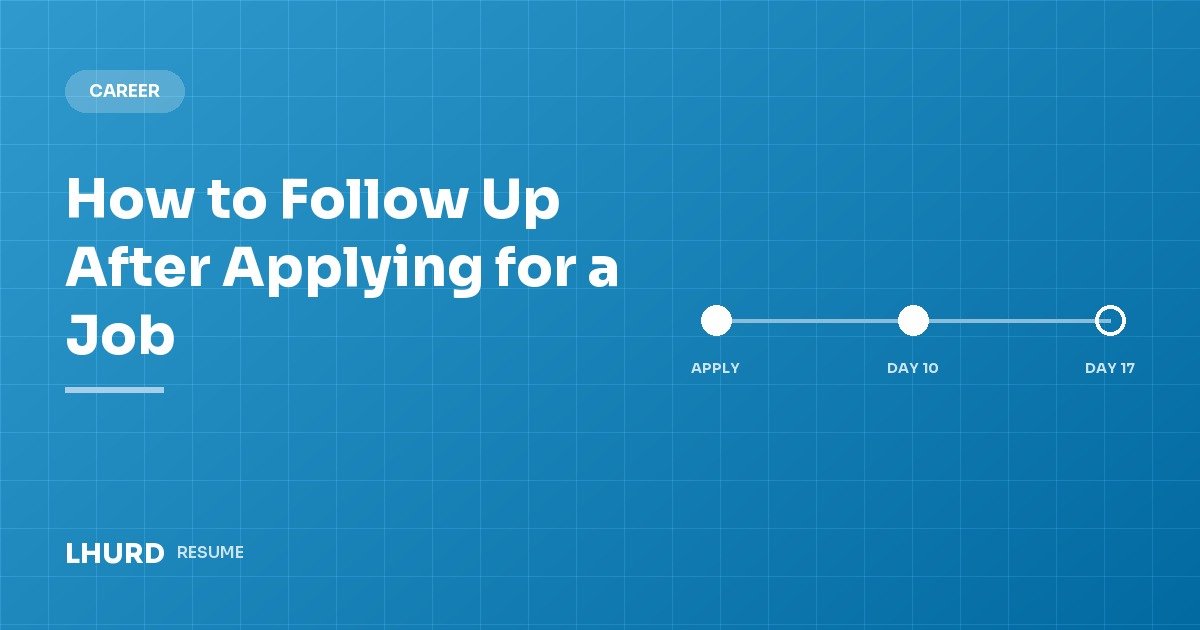
Give the process ten working days from the closing date, or from your application if there is no closing date. Earlier than that and you are following up on something nobody has looked at yet.
If the posting states a timeline, use theirs and add a few days. Following up the morning after a stated decision date reads as impatience rather than enthusiasm.
Find a Person
A message into a careers inbox usually reaches an automated queue. Identify the hiring manager or the recruiter named on the posting, and if neither is named, look for the person who holds the role you would report into.
Keep it to one person. Messaging three people at the same company about the same application looks less like diligence and more like pressure.
- The recruiter or hiring manager named in the posting
- The person who would be your direct manager
- A single contact only, never three in parallel
Ten Working Days
Earlier and you are chasing something nobody has read. Use the posting’s own timeline where it gives one.
One Person, Not Three
A named recruiter or the manager you would report into. Parallel messages read as pressure.
Add Something New
A relevant development, a piece of thinking, or a specific question. A status request gives the reader nothing.
Two Attempts, Then Close
Silence after two is an answer. Pushing past it costs you the next role they might have called about.
Bring Something, Do Not Just Ask
The follow ups that get replies add something to the file. A short note on a relevant thing you have done since applying, a piece of thinking about a problem the role clearly exists to solve, or a specific question about the team.
Three or four sentences. Restate the role and the date you applied, add the new thing, and close with a direct question that can be answered in one line.
Follow Up Twice, Then Stop
One follow up at ten working days. One more a week after that if there is still nothing. Then stop and move the application to a closed list in your own tracking.
Silence after two attempts is an answer. Continuing past that costs you the goodwill of a recruiter who may have a better role for you in three months.
Following Up After an Interview Is Different
Post interview follow up runs on a much shorter clock. Send a note within twenty four hours, referencing something specific from the conversation rather than thanking them generically for their time.
Use it to close a gap. If a question caught you short, a two sentence better answer in that note is the only chance you get to revise it, and interviewers notice candidates who take it.
- After applying: ten working days, then once more a week later
- After an interview: within twenty four hours
- After a stated decision date passes: once, then close it
Applications Going Quiet?
Silence after applying is usually a document problem rather than a follow up problem. Lhurd Resume rebuilds the resume that is going into the system in the first place.
We work with professionals across the United States and Canada, with every document formatted to pass applicant tracking systems.
The Takeaway
Wait ten working days, find one real person, bring something new rather than a status request, and stop after two attempts. The follow up is a small lever, and it only works when the application underneath it was strong.
If several applications are going silent, the document is the more likely cause than the follow up. Getting past the algorithm is where to look first, and Lhurd Resume can audit it with you.


Join the conversation